Home / 03 Hedge cutting & management
Hedge cutting and management.
Formal hedges cut to a level line with clean faces, tall conifers reduced in height and brought back within bounds, and tired shrub borders tidied, mulched and refreshed, with every clipping taken away.
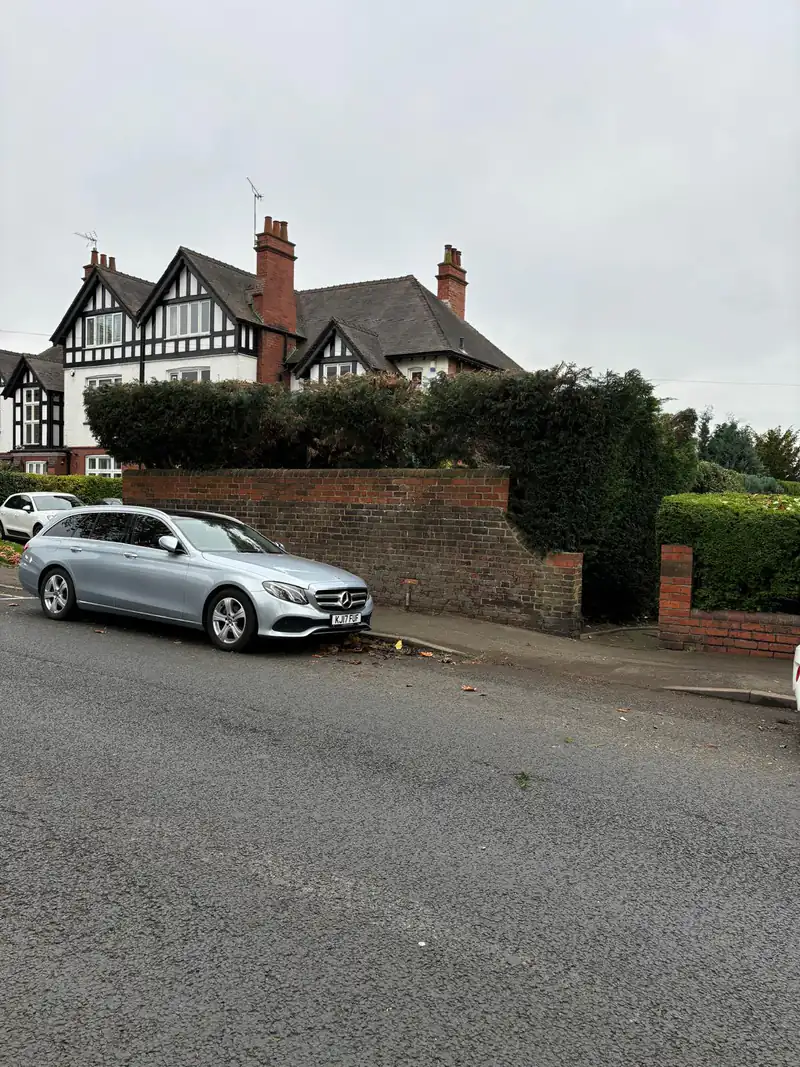
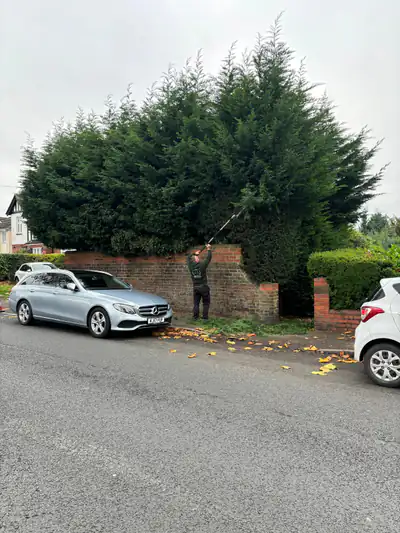 Before
01 / What the work covers
Set out plainly, line by line.
- 01 /
Formal hedge shaping
Beech, hornbeam, privet, laurel, yew and box cut to a level top and clean faces. We batter the sides slightly narrower at the top, so daylight reaches the base and the hedge stays green right down to the ground.
- 02 /
Conifer height reductions
Leylandii and other conifers that have got away are reduced in height and trimmed back to the boundary. We will tell you honestly how far a conifer can be cut before it stops greening up again.
- 03 /
Overgrown hedge restoration
Neglected hedges brought back in stages where the species allows it. Beech, hornbeam, laurel and yew will shoot again from old wood; leylandii and most other conifers will not.
- 04 /
Shrub borders and mulching
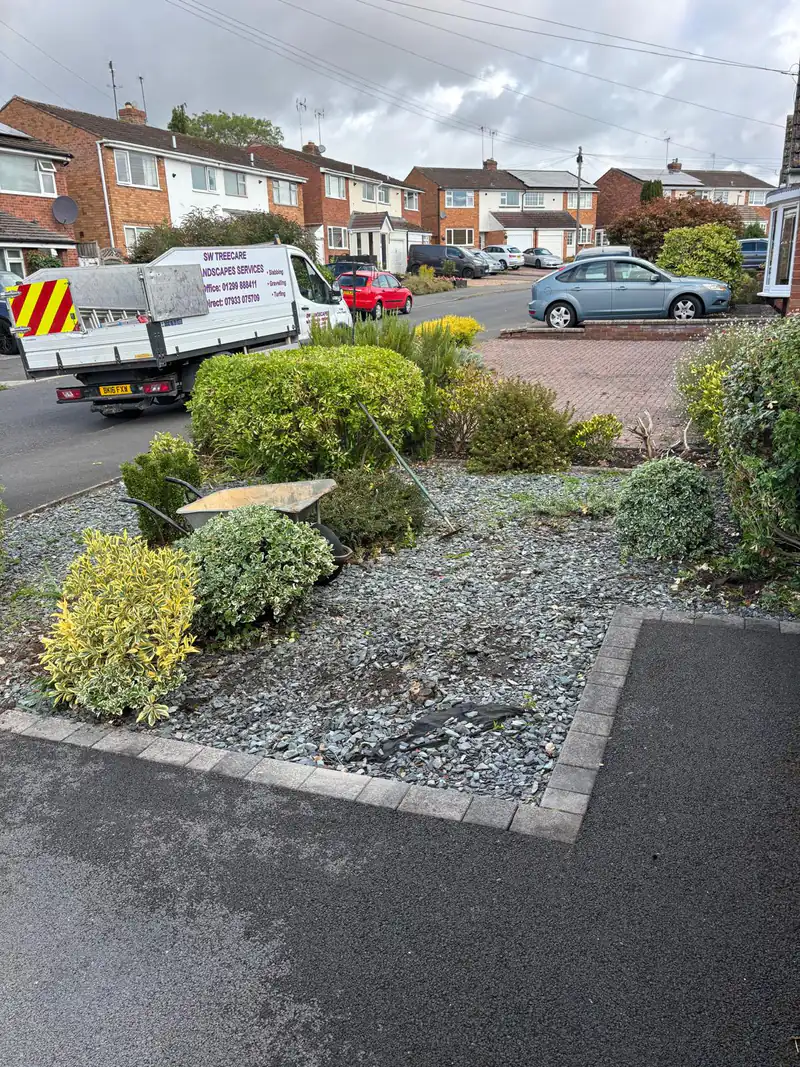
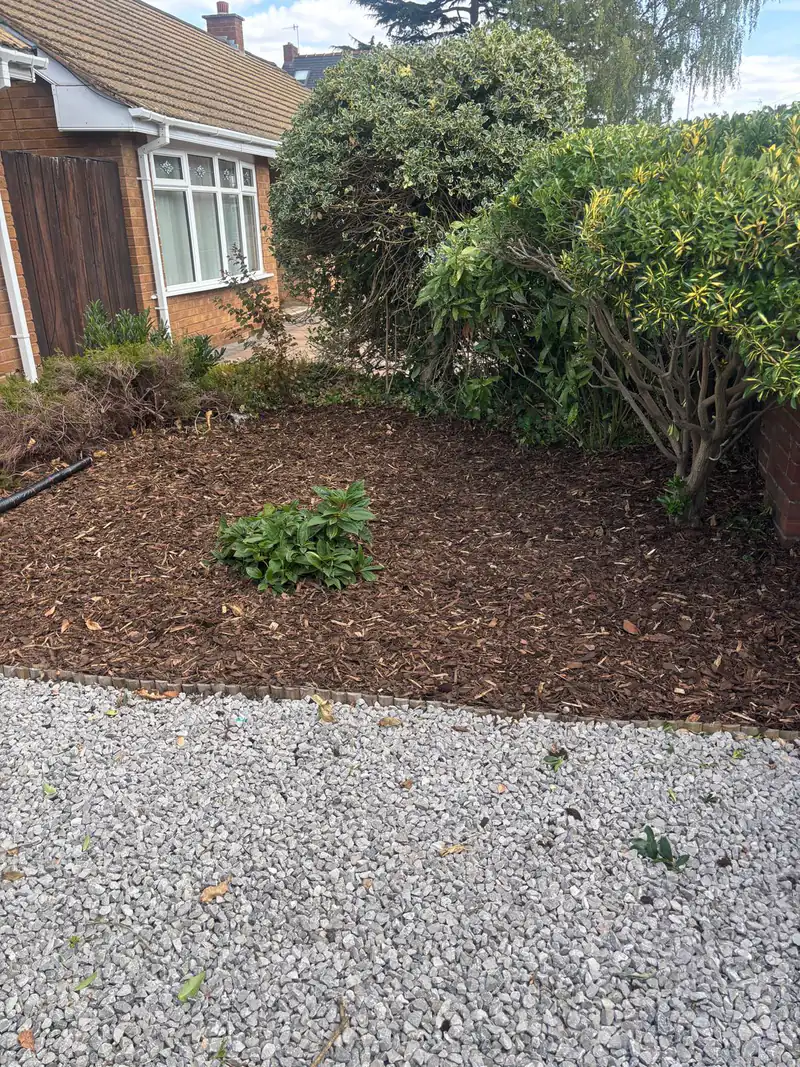
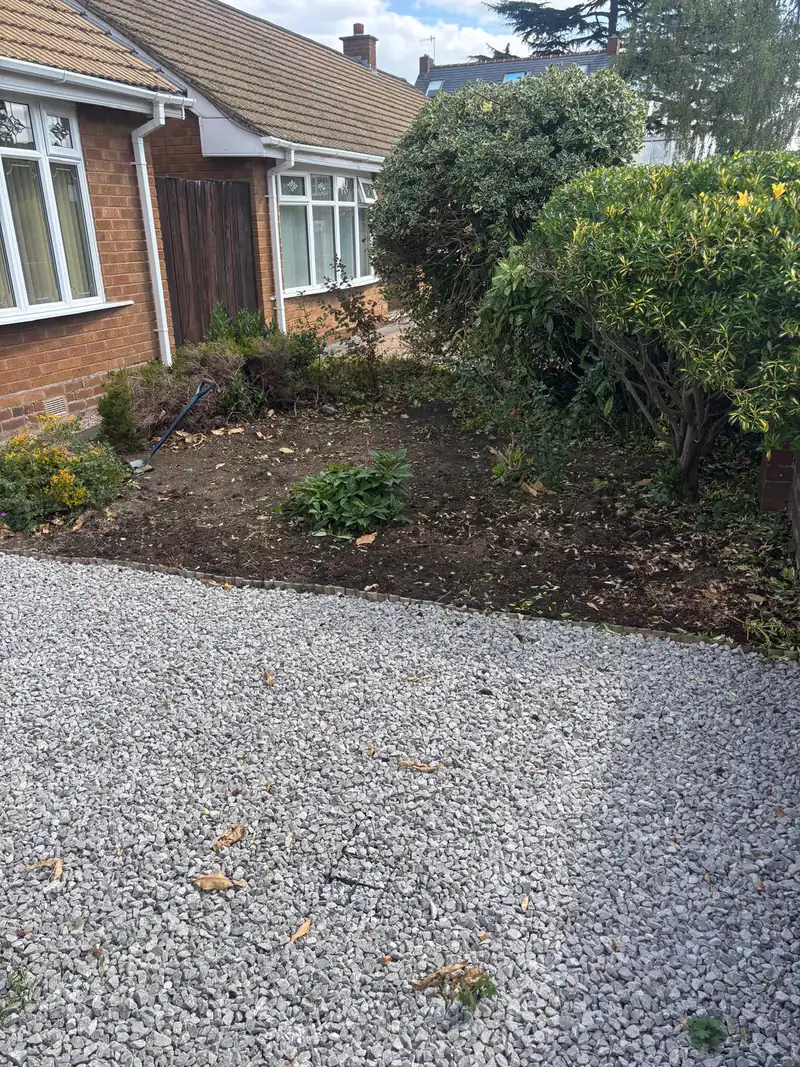
Overgrown front borders pruned, edged and weeded, then dressed in deep bark mulch or finished over weed membrane with a gravel refresh to hold moisture and suppress weeds.
- 05 /
Seasonal maintenance
A regular trim once or twice a year keeps a hedge dense and stops it becoming a bigger job.
02 / From our own jobs
Before and after.
No stock photography. These were taken on site by the team, on the day the work was done. Drag the handle to compare. More recent work
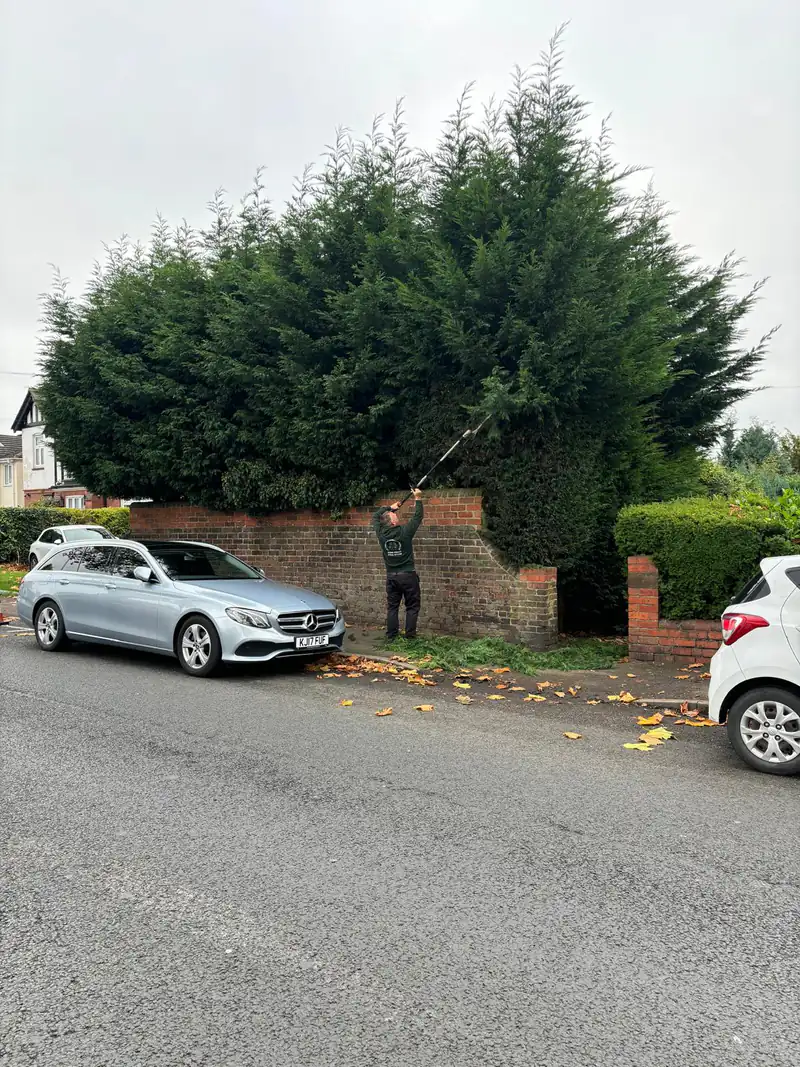
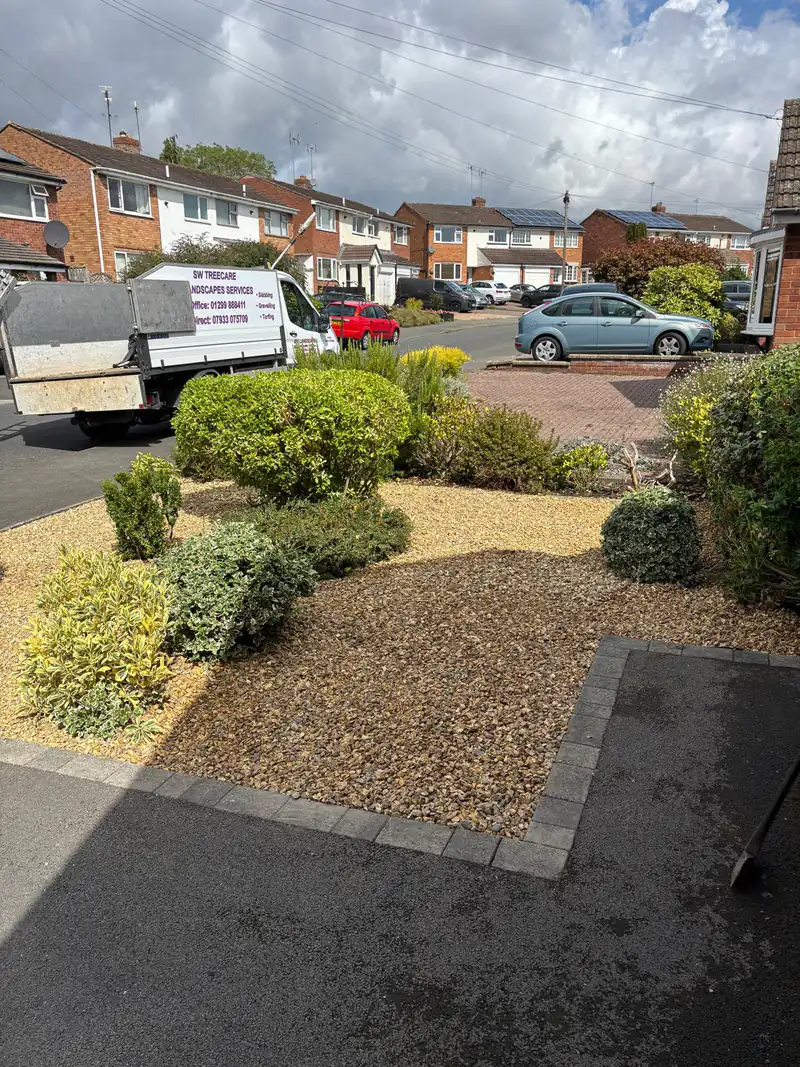
When you ring SW Tree and Landscapes, you speak to the family. The person who answers is the person who walks round your garden, writes your quote and turns up to do the work.— The family at SW Tree and Landscapes
- ANo pushy salespeople — ever
- BFair, transparent pricing in writing
- CGardens left spotless
03 / How a job runs
Four steps, start to finish.
- We agree the finished height and line with you before we start.
- We check for nesting birds first. Wild birds, their nests and eggs are protected under the Wildlife and Countryside Act 1981, so heavy cutting is planned outside the nesting season, which runs roughly from March to August.
- Paths, drives and pavements are sheeted or swept as we go.
- All clippings are taken away and recycled.
04 / Questions
What people ask us about hedge cutting.
When should a hedge be cut?
Most formal hedges are trimmed in late summer, with a second cut for fast growers. Hard reductions are best done in winter. We avoid heavy cutting in the bird-nesting season, roughly March to August, and check for active nests before any work.
My neighbour’s hedge is too high. What can be done?
Talk to your neighbour first; most are happy to share the cost of a reduction. If that fails, councils can consider a formal complaint about a high evergreen hedge. We can quote either owner for the work.
Can a conifer hedge be cut back hard?
Only so far. Most conifers, leylandii included, will not regrow from old brown wood, so the faces can only be taken back to where there is still green growth. Height can usually be reduced more freely.
Does the type of hedge change how you cut it?
Yes. Beech, hornbeam, laurel and yew can be cut harder and will usually shoot again from old wood, though yew and laurel recover slowly. Leylandii and other conifers will not. Laurel is best cut stem by stem with secateurs, so the big leaves are not shredded.
Why are the sides cut narrower at the top?
A slight batter, narrower at the top than the base, lets light and rain reach the bottom of the hedge, which keeps it thick and green to the ground instead of going bare at the foot.
05 / Free site visit
Get your hedge or border looked at.
Tell us where you are and what you would like done. One of the family will visit free of charge and send a clear fixed price in writing — zero sales pressure.
06 / Where we work
Based in Stourport-on-Severn, working across Worcestershire & the Shropshire border.
- 01Stourport-on-Severn
- 02Kidderminster
- 03Bewdley
- 04Hartlebury
- 05Ombersley
- 06Worcester
- 07Droitwich
- 08Bromsgrove
- 09Bridgnorth
If you are a little further out, ring us — we will tell you straight whether we can help. See all areas covered.
07 / Other services